
[:it]
Ecco la differenza tra lampade alogene, a basso consumo e a LED
Le persone sono come le vetrate.
Scintillano e brillano quando c’è il sole, ma quando cala l’oscurità rivelano la loro bellezza solo se c’è una luce dentro.
Elisabeth Kubler-Ross
In primo luogo occorre premettere che già da qualche anno, le vecchie lampadine a incandescenza, quelle che s’illuminano sfruttando appunto l’incandescenza di un filamento attraversato dalla corrente elettrica, sono fuori commercio, in quanto hanno un eccessivo dispendio di energia elettrica, che si disperde in calore, rendendo questo tipo di lampadine poco efficienti.
Le alternative sono fornite al momento da tre nuovi tipi di lampadine:
- alogene
- a basso consumo (a fluorescenza)
- LED
Vediamole nel dettaglio, per fare una scelta più consapevole, a seconda degli obiettivi che avete, se volete cioè seguire un criterio di puro risparmio energetico, oppure dare carattere agli ambienti giocando sulle tonalità e la luminosità, o invece siete guidati solo dalla funzione e dal tipo di ambiente da illuminare (bagno, corridoio, scrivania).
Lampadine alogene
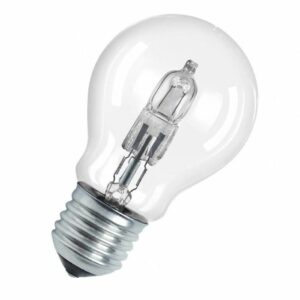
Le lampadine alogene sono in pratica come quelle a incandescenza, ma nel gas contenuto nel bulbo sono aggiunte un elemento alogeno (in genere iodio, kripton o xeno) che permette al filamento di riscaldarsi a temperature molto più elevate, aumentandone così l’efficienza e la luminosità. Tali lampade consentono una resa energetica intorno al 15%, il che significa che del totale dell’energia consumata, è il 15% a tradursi in luce. Hanno una aspettativa di durata doppia rispetto a quelle a incandescenza. Inoltre, questo modello di lampada presenta la caratteristica di essere dimmerabile, ciò significa che si può applicare un interruttore in grado di variare l’intensità di luce, per creare l’atmosfera giusta per il vostro ambiente, da una luminosità forte a luci più morbide e soft. Prossimamente saranno anch’esse eliminate dal commercio (nel settembre 2016) per far posto a modelli più efficienti.
Lampadine a basso consumo (a fluorescenza)
Le lampadine a fluorescenza, dette anche ‘a basso consumo’,
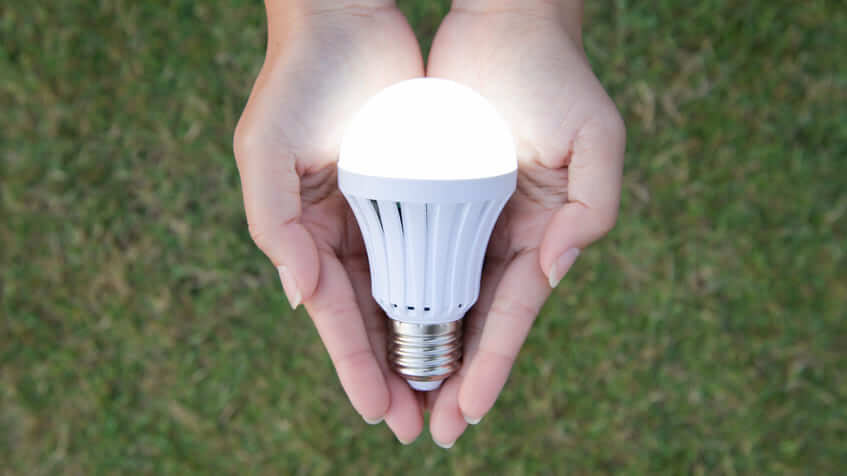
funzionano grazie a una scarica generata dalla differenza di potenziale tra due elettrodi immersi in un gas. Solitamente di forma tubolare, sono nate per risolvere il problema della bassa efficienza delle vecchie lampade a incandescenza, ma presentano alcuni fattori limitanti. Questi prodotti necessitano infatti di riscaldarsi per raggiungere la massima luminosità, sono molto fragili e perdono di intensità luminosa alle basse temperature. Di contro emettono bassissimi livelli di raggi infrarossi e ultravioletti, molto dannosi per la pelle e gli occhi, tuttavia perdono intensità luminosa a basse temperature. Se ne trovano di forme e tonalità di luce differenti.
Consentono una resa energetica superiore alle alogene, raggiungendo il 25% di efficienza, significa che a parità di luce emessa consumeranno molto meno. Costano di più, ma possono durare fino a 8 o 10 anni, consentendo di recuperare così l’investimento iniziale. Queste lampadine non sono dimmerabili.
Lampadine a LED
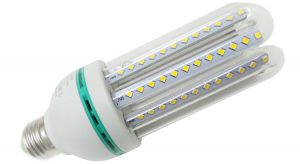
La tecnologia LED (Light Emitting Diode – Diodo a emissione luminosa) fu inventata nel 1962 dall’americano Nick Holonyak, un consulente della General Electric.
I primi LED erano solo di colore rosso ed erano utilizzati per applicazioni come telecomandi ad infrarosso o illuminazione di display.
Successivamente furono perfezionati LED che emettevano luce gialla e verde e che permettevano di visualizzare quattro diversi stati (spento, verde, rosso, verde+rosso=giallo).
Maggiore sviluppo si ebbe negli anni ’90 fino a quando, con la possibilità di creare la luce blu, fu possibile realizzare dispositivi a tre colori (rosso, verde e blu), che permettevano di riprodurre qualunque colore, cosa che portò ad un grande sviluppo della tecnologia, grazie all’ampliamento delle possibilità di impiego.
Hanno un costo leggermene più alto, ma possono vantare una resa eccezionale, rispetto ai modelli precedenti, con un risparmio fino all’80% rispetto a quelle a incandescenza. Anche in termini di durata rappresentano un investimento sicuramente vantaggioso, potendo raggiungere
una vita minima di 15-20 anni.
Queste lampadine presentano la caratteristica di essere anche dimmerabili, e hanno molti vantaggi: si accendono immediatamente, non producono calore, non sono fragili, sono utilizzabili con i regolatori di luminosità e, soprattutto, non mettono radiazioni infrarosse o ultraviolette, dannose per la pelle.
Come funzionano i LED
La tecnologia sfrutta la proprietà di elettroluminescenza di alcuni materiali semiconduttori opportunamente drogati sotto l’azione di un campo elettrico. Gli elettroni così eccitati emettono fotoni e quindi luce.
In pratica con il principio dell’elettroluminescenza si ha una conversione diretta dell’energia elettrica in luce. Per fare un confronto, nelle lampade ad incandescenza, ormai fuori commercio, la trasformazione in luce era solo il terzo stadio di un processo che produceva calore.
E proprio l’assenza di calore (non di certo l’unico !) è uno dei vantaggi dei LED: tale assenza di calore si può sfruttare al fine di una migliore gestione della climatizzazione.
Vantaggi dei LED
Un altro degli aspetti positivi è la possibilità di miniaturizzazione che ne estende in maniera illimitata il campo di applicazione.
Ma gli apparecchi di illuminazione a LED sono anche più efficienti e consentono un maggior risparmio energetico, sono più resistenti all’umidità ed agli agenti atmosferici oltre che agli impatti e agli urti, presentano un tipo di luce che non altera i colori reali ed hanno anche la possibilità di emettere luci colorate.
Nel corso degli anni, inoltre, sono venute riducendosi alcune criticità come lo scarso numero di lumen e l’alto costo.
Ancora nel 2000 una lampada a LED non andava oltre i 20 lumen, mentre oggi supera i 90-95 lumen/watt.
Il costo, ancora alto rispetto alle lampade a fluorescenza, si sta però progressivamente riducendo, a fronte di un minor impatto ambientale.
Infatti queste lampade contengono solo polvere di silicio e non contengono sostanze nocive, come piombo, azoto o mercurio e hanno una durata più lunga (60.000 ore di media a fronte delle 8.000 ore di una lampada a fluorescenza), pur con una potenza minore. Infatti un LED da 4W illumina quanto una lampadina da 50W.
Non provocano nemmeno inquinamento luminoso, perché il LED illumina, senza saturare l’ambiente e non sono dannose per gli occhi perché non emanano raggi ultravioletti o infrarossi.
Il risparmoi energetico è notevole: le lampade a LED consumano un terzo dell’energia richiesta da una lampada a incandescenza.
Applicazioni dei LED
Nel corso degli anni i LED si sono affermati come fonte di illuminazione in tutte quelle applicazioni in cui serviva durata, efficienza, risparmio e resistenza.
Così possiamo trovarli nei telecomandi ad infrarossi, come indicatori di stato, nei semafori, negli stop delle automobili, nei cartelloni pubblicitari, fino all’illuminazione urbana e domestica.
In particolare i LED sono stati impiegati nell’illuminazione pubblica e nelle installazioni grazie alla capacità della loro luce di modellare i volumi, di oggetti e architetture, di metterne in risalto i pregi senza abbagliare gli occhi.
In ambito domestico i LED si possono (anzi si dovrebbero!) usare dappertutto: sia per gli interni (sfruttando le potenzialità sopra descritte) , che in esterni, per illuminare fontane, giardini e piscine.
La luce si dona liberamente, riempiendo tutto lo spazio disponibile. Non cerca nulla in cambio; non chiede se si è amici o nemici. Si dà di per sé e non si risparmia mai.
Michael Straßfeld
Scopri la vasta gamma di articoli per l’illuminazione presenti sul nostro e-shop![:en]People are like stained-glass windows.
Sparkle and shine when the sun is shining, but when darkness falls reveal their beauty only if there is a light inside. (Elisabeth Kubler-Ross)
First, we need to point out that a few years ago, the old incandescent bulbs, the ones that light up using just the glow of electrical current passes through a filament, they are not for sale, because they have an excessive waste of electricity, which it disperses into heat, making this type of inefficient light bulbs.
The alternatives are provided at the time by three new types of bulbs:
- halogen
- low consumption (fluorescence)
- LED
Let’s see them in detail, to make a more informed choice, depending on the goals that you have, that is, if you want to follow a policy of pure energy savings, or give character to the rooms playing on the shades and brightness, or rather are guided only on the function and type of environment to be illuminated (bathroom, hall, desk).
Halogen bulbs
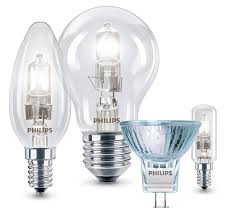
Le Halogen bulbs They are in practice as incandescent bulbs, but in the gas contained in the bulb are added a halogen element (typically iodine, krypton or xenon) which allows the filament to warm up to much higher temperatures, thus increasing the efficiency and brightness. These lamps allow energy yield of around 15%, Which means that the total energy consumed, is 15% to result in light. They have an expectation of double lifetime than incandescent
. In addition, this model of lamp has the characteristic of being dimmable , this means that you can apply a switch able to vary the intensity of light,to create the right atmosphere for your environment, by its brightness to softer light and soft. Coming soon will also eliminated from the market (In September 2016) to make way for more efficient modules.
Light bulbs (fluorescent)
The fluorescent bulbs, Also called ‘low-energy’, , work thanks to a discharge generated by the difference in potential between two electrodes immersed in a gas. Usually the form of tubes, were born to solve the problem of low efficiency the old incandescent bulbs, but have some limiting factors. These products in fact need to heat up to reach maximum brightness, they are very fragile and lose their light intensity at low temperatures. Against emit very low levels of infrared and ultraviolet rays, very harmful to the skin and eyes, however lose light intensity at low temperatures. They come in different shapes and shades of light.
Allow a higher energy yield to halogen, reaching 25% of efficiency, It means that the light emitted equal consume much less. They cost more, but can last up to 8 or 10 years, allowing it to recover the initial investment. These bulbs are not dimmable.
LED bulbs
The LED (Light Emitting Diode – light-emitting diode) was invented in 1962 by Nick Holonyak, a General Electric American consultant.
The first LEDs were only red and were used for applications such as infrared remote controls or display lighting.
Subsequently they were perfected LED that emitted yellow and green light and that allowed to display four different states (off, green, red, red + green = yellow).
Major development occurred in the 90s until, with the ability to create light blue, it was possible to produce devices in three colors (red, green and blue), which allowed to reproduce any color, which led to a great development technology, thanks to the expansion of employment opportunities.
They have a slightly higher cost but can boast a outstanding performance, compared to previous models, with a saving up to 80% compared to incandescent. Also in terms of duration they are definitely a profitable investment, being able to reach
a minimum life of 15-20 years.
These bulbs have the characteristic of also be dimmable, and have many advantages: light up immediately, do not produce heat, they are not fragile, They are usable with the brightness regulators and, especially, do not emit infrared and ultraviolet radiation, harmful to the skin.
How do LED
The technology uses the electroluminescent properties of some semiconductor materials appropriately addicts under the action of an electric field. The so excited electrons emit photons and thus light.
In practice with the principle of electroluminescence is has a direct conversion of electrical energy into light. For comparison, in incandescent lamps, now out of print, the transformation into light was only the third stage of a process that produced heat.
And the absence of heat (certainly not the only one!) Is one of the advantages of LEDs: the absence of heat can be exploited in order to better management of air conditioning.
Advantages of LED
Another of the positive aspects is the possibility of miniaturization that it extends in a manner the unlimited scope.
But LED luminaries are also more efficient and allow greater energy savings, are more resistant to moisture and weathering as well as to impacts and shock, are a type of light that does not alter the actual colors and also the possibility of emitting colored lights.
Over the years, moreover, they have come reducing some critical as the small number of lumens and the high cost.
Still in 2000, an LED lamp did not go beyond 20 lumens, while today more than 90-95 lumens / watt.
The cost, yet high compared to the lamps fluorescence, though it is gradually reducing, compared with a lower environmental impact.
In fact, these lamps contain only silicon powder and do not contain harmful substances, such as lead, nitrogen or mercury and have a longer life (60,000 hours in average of 8,000 hours of a fluorescent lamp), although with a lower potency. In fact, a 4W LED illuminates as a 50W bulb.
Not even cause light pollution, because the LED lights, without saturating the environment and are not harmful to the eyes because they do not emit ultraviolet or infrared.
Energy saving is remarkable: LED lamps consume a third of the energy required by an incandescent lamp.
LED applications
Over the years, the LEDs have established themselves as a source of illumination in all those applications where needed durability, efficiency, economy and resistance.
So we can find them in the infrared remote controls, such as status lights, in traffic lights, stop the car, in billboards, up to urban lighting and domestic.
In particular, LEDs have been used in public lighting and in installations with the ability of their light to model the volumes of objects and architectures, to put in prominence the merits without dazzling the eyes.
In domestic environment the LEDs can (indeed should!) Use everywhere: both internal (by exploiting the potential described above), and outdoor, to litghting fountains, gardens and swimming-pools.
“The light gives himself freely, filling all the available space. It doesn’t look for anything in return; it doesn’t ask if you are friends or enemies. It gives itself and never save itself. (Michael Straßfeld)”[:]


